

There’s a familiar scene in the business: a newly opened garage, its chemical storage overflowing with three shelves full of bottles from four or five different brands, yet when a car comes in, the mechanics are still struggling to find the right product. Six months later, half the bottles are still sealed, some have separated, and the owner begins to realize their initial investment is sitting idle in storage instead of generating revenue. Building a garage’s car care product line isn’t a purchasing problem, but an operational one: what to buy, how much to buy, at what stage to use it, who is allowed to use it, what the cost per car is, and when to upgrade the product line. This article goes through that entire chain of decisions, from before you even buy your first bottle to when your product line is large enough to require numerical management.
Define Your Business Model Before Making a Purchase
The most costly mistake a new car wash makes isn’t choosing the wrong brand, but buying products before determining what services they offer. The three common models in Vietnam have vastly different cost structures. Quick washes rely on volume, requiring few product codes, but each code must be inexpensive per vehicle and diluted at a high ratio: stable snow foam, safe wheel cleaner, and quick-drying tire conditioner. General garages have a stable but diverse range of vehicles, requiring a moderately broad product catalog, primarily focusing on heavily soiled vehicles. Detailing centers sell their expertise and time, accepting more expensive chemicals for material safety and repeatable results; lacking graded wax or residue-removing solutions before coating makes quality unsustainable. For dealerships, the consultation framework involves asking the client what services they offer, how many vehicles they handle daily, and how many technicians they employ before recommending products.
Minimum Starting Toolkit for a Newly Opened Workshop
A new workshop should start with a minimum set of products that can handle the basic process, rather than a full set for every situation. This set typically includes eight to twelve products: pre-wash, snow foam, pH-neutral cleaning solution, wheel cleaner, tire cleaner, an all-purpose cleaner called APC for interior and engine bay, glass cleaner, plastic conditioner, tire conditioner, and a quick-acting spray protector. If doing paint correction from the start, add a metal stain remover, a medium-duty cutting compound, a finishing compound, and a residue remover. Starting small isn’t about saving money, but about data: the first three months will tell you how dirty the cars are and how much product is used per run. A small, well-functioning workshop with twelve products is usually more profitable than a similarly sized workshop with thirty, because the workers are familiar with the process, inventory turns quickly, and there’s virtually no expired product to be discarded.
List of Construction Chemicals According to Process Line
The most effective way to build a checklist is to follow the process path rather than the product groups in the catalog: visualize the car going from the workshop gate to the handover point and record each touchpoint. The exterior path goes from pre-wash and snow foam, through body wash solution, wheel cleaner, tire cleaner, degreaser and degreasing, to the protective coating. The interior path runs from vacuuming, diluted APC for plastics and carpets, leather solution, and upholstery cleaning solution used with a spray and extraction machine and deodorizer. The glass path is separate because chemicals and cloths cannot be shared. Each touchpoint needs a specific default code; this principle eliminates arbitrariness: training is shortened, and results are consistent across shifts. Additional codes should only be reserved for exceptions such as long-standing brake dust. Koch Chemie, Sonax, Cartec, and ValetPRO all organize their products according to this logic, so choosing a complete process path from the same system simplifies dilution and training.
Consumable Tools and Replacement Frequency
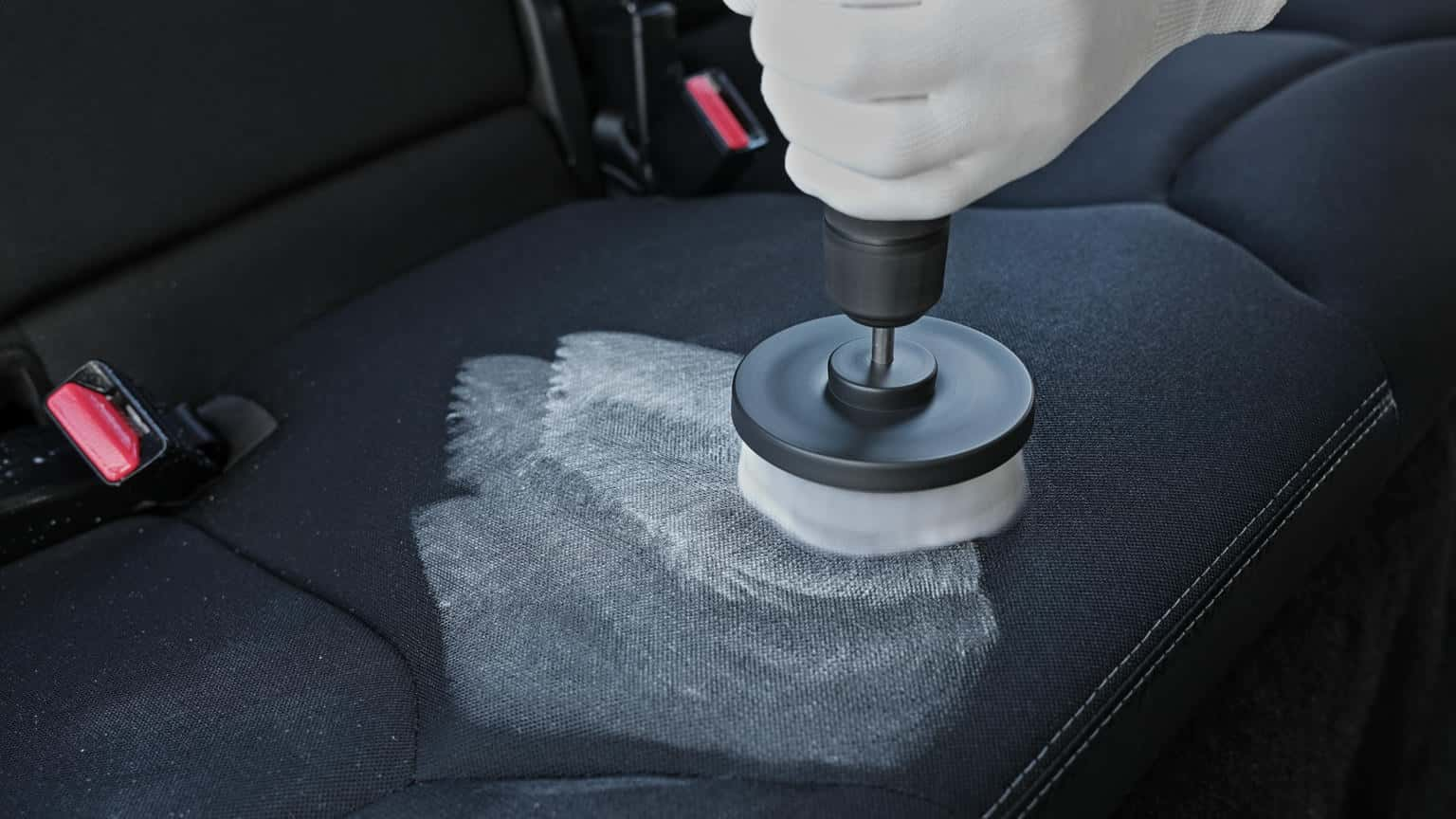
Consumables are often overlooked but have the most significant impact on output quality. Microfiber towels should be categorized by function and color code: high-density drying towels, interior towels, tightly woven glass cleaning towels, towels for removing residue after polishing, and dirty towels for wheels and engine compartments. A workshop processing fifteen to twenty cars a day needs several dozen of each type to ensure sufficient rotation between wash shifts. Long-fiber cleaning gloves, soft brushes for wheel wells, stiff brushes for tires, detail brushes, polishing pads, and nitrile gloves all fall into this category. Consumables are recurring operating costs: microfiber towels retain their quality for about fifty to eighty washes if washed separately, without fabric softener, and dried at low heat, after which the fibers clump together, causing streaks; pads should be discarded when the surface becomes hard or the adhesive peels at the edges. A clear replacement threshold is necessary, as a single damaged towel costing tens of thousands of dong can cause swirl marks that waste an entire polishing session.
Investment Equipment Group and Priority Order
Equipment is the biggest expense, so it’s necessary to prioritize based on cash flow rather than buying everything at once. The essential equipment from day one includes a continuous-use pressure washer, a snow foam generator, a sufficiently powerful vacuum cleaner, and a water treatment system if using hard water; this equipment serves all vehicles, so the return on investment is the quickest. The second group, invested in when starting specialized services, includes a dual-orbit polishing machine (DA machine), a white light inspection lamp, and a paint thickness gauge. The thickness gauge doesn’t generate revenue but controls risk: it prevents polishers from over-polishing thin or previously repainted paint, an incident that could wipe out an entire month’s profit. The third group is for interior services: a spray-extraction washer, a compressed air blower, and a hot air generator. Rupes or Flex dual-orbit machines are safe for novice polishers, while rotary machines should only be used by experienced professionals.
Calculate the Cost of Chemicals Per Vehicle Instead of Looking at Bottle Prices
This is where many workshop owners miscalculate. The price per bottle barely reflects the true cost, because what determines it is the cost per vehicle. A concentrated solution diluted one part to twenty parts water yields a much larger working fluid volume than a pre-mixed product that is half the listed price. The calculation is quite simple: divide the price per liter of concentrate by the dilution factor to get the price per liter of working fluid, then multiply by the actual amount consumed per vehicle. To do this, you must measure actual consumption, not estimate by feeling: record the fluid level in the spray bottle at the beginning and end of each shift, divide by the number of vehicles worked, and repeat for two weeks. The results are often surprising, as losses due to over-spraying, overmixing and discarding, or spillage when dividing bottles account for a significant percentage. Only with these figures for each service package can you determine which one is truly profitable.
Inventory Management, Expiration Dates, and Product Quantity Problems
Chemical inventory faces three constant risks: running out of stock mid-shift, expired stock, and spoilage due to improper storage. The first risk is addressed by reordering, which is the minimum inventory level calculated from the average consumption rate multiplied by the lead time plus a contingency fund. The second risk is addressed by the first-in, first-out principle, recording the opening date on the bottle and prioritizing the use of opened bottles; most chemicals have a shelf life of several years unopened but this is significantly shortened after opening, especially water-based products and SiO2-based coatings, which are highly sensitive to moisture. Storage risks are particularly important in Vietnam’s climate: warehouses need to be dry, well-ventilated, and protected from direct sunlight, as high temperatures cause emulsions to separate while low temperatures cause some products to crystallize. Bottles for smaller quantities must be labeled with the name, dilution ratio, and dilution date; drinking water bottles should never be used.
Standardize processes and train technicians to ensure good quality chemicals are not misused.
Misusing good chemicals is even worse than using ordinary chemicals correctly, a fact many workshop owners only realize after having to pay for a set of wheels or a faded plastic panel. The cheapest way to prevent this is to post a dilution chart right in the mixing area, clearly stating each code for which surface, the ratio, the maximum waiting time, and whether it can be air-dried, along with a graduated measuring cup or pump instead of estimating by eye. Color coding for towels, gloves, and brushes must be consistent, as mixing tools between wheels and car bodies is the most common cause of swirl marks. Training should be integrated into each step of the process: new workers need to understand why chemicals shouldn’t be sprayed on hot surfaces in the sun, why acid-based wheel cleaners shouldn’t be allowed to dry, and why a test should be done in an inconspicuous area when encountering unfamiliar materials. Once procedures are documented, quality no longer depends on who is operating the machine today.
Choose Suppliers and Upgrade Your Product Line Based on Revenue
Choosing a supplier for a workshop is completely different from buying a few bottles for trial. The first criterion is supply stability, because a workshop that has standardized its process around a particular product code will face problems if that code disappears from the market for several months. The second criterion is technical support: if you encounter unusual stains or surfaces with uncertain compatibility, you need immediate assistance, not a few days’ wait. Next is accompanying documentation: dilution instructions, MSDS, clear origin information, and pricing based on volume. Vncar Solutions plays this role perfectly, importing and distributing to garages, detailing centers, and domestic dealers, providing a complete process with technical documentation. The product range also evolves with revenue: first, establishing a minimum range, then adding paint correction products, and finally premium coatings. Each new product code must be linked to a service that customers inquire about and have a selling price.